
Will snail speakers experience sound distortion?
Source of articles:www.tembdq.com
Release time:2026/1/4 15:21:32
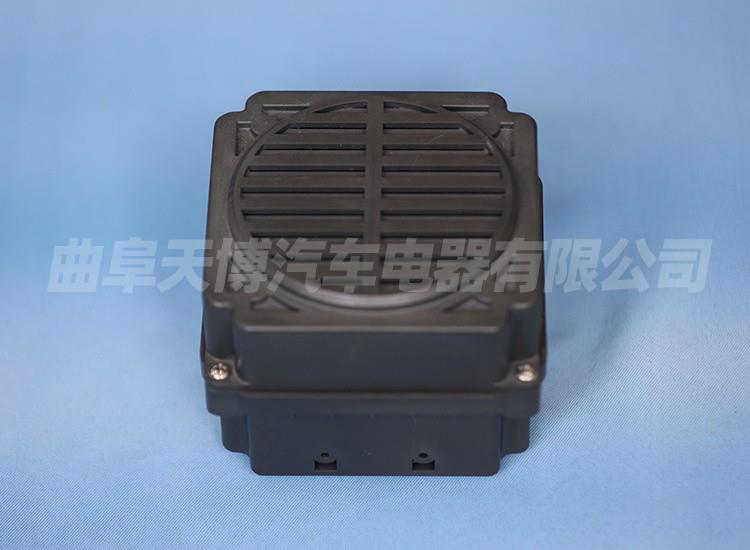
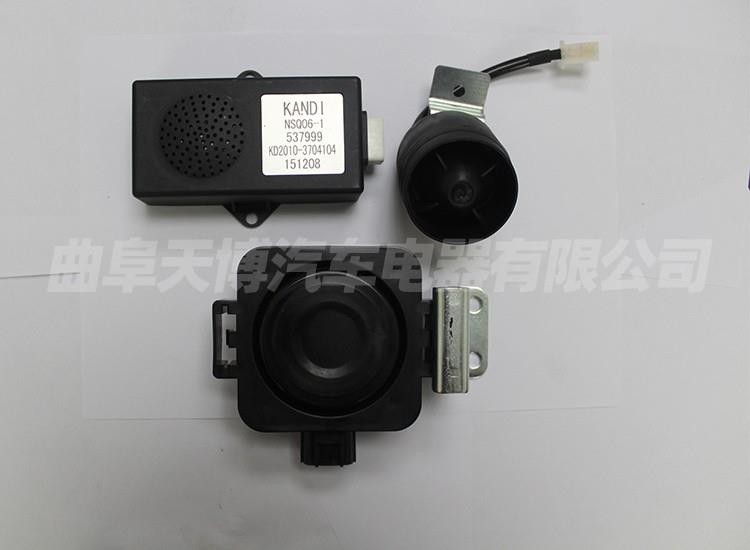
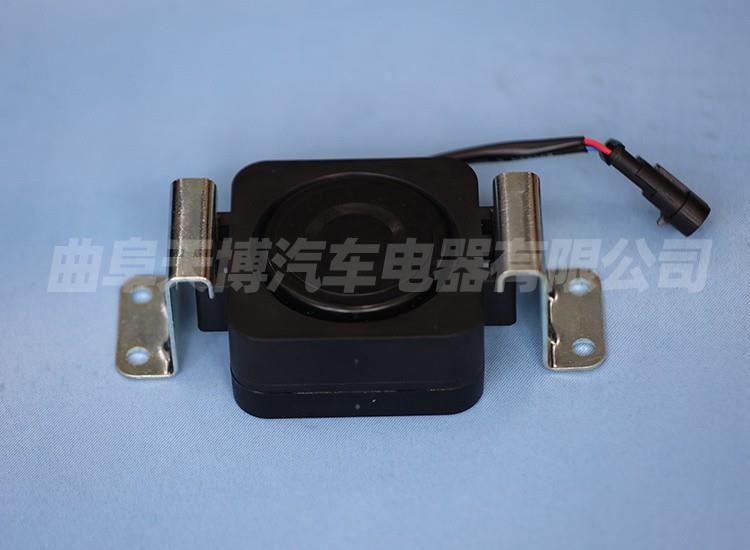
Snail speakers are a pair of car speakers called snail speakers because they resemble snails in appearance. Although we all know that snail speakers can produce 'distortion' after prolonged use, what does' distortion 'mean? Today, the manufacturer will take you to understand the "distortion" of snail speakers.

Reasons for distortion of snail horn:
Horn distortion, also known as high pitch distortion, refers to the phenomenon where the sound radiated from a horn should only be a reproduction of the applied signal. However, in reality, in addition to the fundamental frequency signal sound, other frequencies of sound appear in the radiated sound, giving the sound an abnormal feeling. This phenomenon is called distortion.
1. Driving force (current deformation caused by uneven distribution of magnetic flux, input exceeding rated input power).
2. Supporting part (flange part of the elastic wave and vibration plate),
3. Vibration plate piston motion and segmentation motion, etc
The distortion of the snail horn includes:
1. Harmonic distortion: Our speaker factory has learned that the uneven magnetic field of general speakers and the nonlinear distortion of the vibration plate system cause it. Usually generated at low frequencies, due to the large amplitude at low frequencies, non-linear distortion is prone to occur in voice coil cones, pop waves, etc. In the magnetic return gap of the horn, not only does there exist a circular magnetic field at the corresponding thickness of the iron sheet, but in fact, there is also a magnetic field outside, but the magnetic field lines are not as dense. Therefore, the magnetic field is not uniform, and there is non-uniformity. Therefore, when the coil moves in the gap, the perceived magnetic field is uneven, which can cause distortion.
2. Intermodulation distortion: It is caused by the mutual modulation of two signals of different frequencies when they are simultaneously added to a speaker. Intermodulation distortion can cause distortion in pitch, and when the intermodulation distortion is large, it can significantly deteriorate the playback sound quality such as choir clapping.
3. Transient distortion: This is caused by the vibration system of the Surabaya snail horn not being able to keep up with the fast changing electrical signals, resulting in output waveform distortion; This distortion is related to the smoothness of the frequency response curve. At each resonance point of the vibrating plate (equivalent to the peaks and valleys of the frequency response curve), this distortion is more severe.
That's all for today's introduction about the "distortion" of snail speakers. For more exciting little knowledge about snail speakers, we will continue to organize and share it with you in the later stage. We hope that you will pay close attention to our latest developments and call us for consultation.